
Should you repair or replace your appliance? Use the 50 percent rule: If the repair cost exceeds half the price of a new appliance and your appliance has passed half its expected lifespan, replacement is the better option. For newer appliances still under warranty or those less than 5 years old, repair is usually more cost-effective. Energy savings from newer models can offset replacement costs within 5-7 years.
When your refrigerator stops cooling or your washing machine won’t spin, you face a tough decision. Should you repair your appliances or buy a new one? For homeowners in Grand Prairie, TX, and surrounding areas like Arlington, Irving, and Dallas, this choice impacts both your budget and daily life. We help families make this decision every day.
Understanding Your Appliance’s Life Expectancy
Every home appliance has a typical lifespan. Knowing where your appliance stands helps you make an informed decision about whether to repair or replace.
Your refrigerator typically serves you well for 9 to 14 years. That trusty washing machine in your laundry room? It usually lasts between 8 and 16 years, with most making it to about 12 years. Your clothes dryer tends to be even more durable, often running smoothly for 11 to 18 years. Meanwhile, your dishwasher usually needs replacing after about 9 years of faithful service.
When it comes to cooking appliances near popular Grand Prairie spots like Mike Lewis Park or Epic Central, electric ranges can last 13 to 20 years, while gas ranges often extend the life to 15-23 years. Your microwave oven, though used daily, typically needs replacement every 5 to 10 years.
The 50 Percent Rule: Your Decision Guide
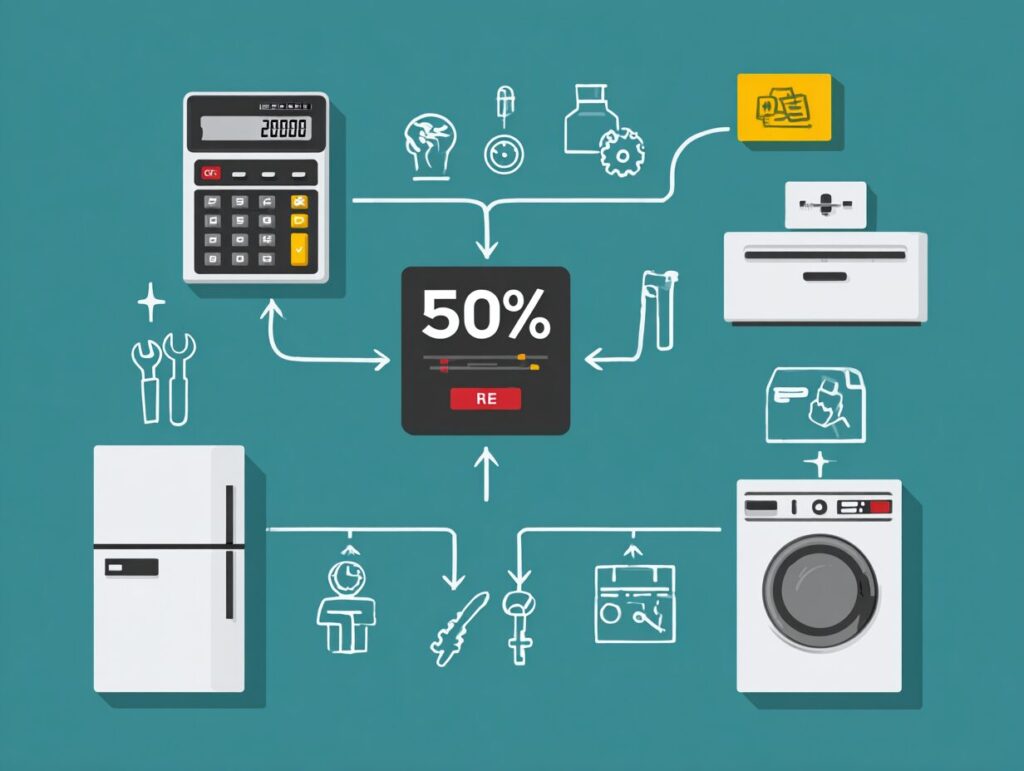
Here’s a simple way to decide whether to repair or replace an appliance. If the repair cost is more than half the price of a new appliance, and your current machine has already lived through half its expected lifespan, it’s time to replace your appliance.
Let’s say you have an 8-year-old refrigerator that needs a $500 compressor repair. A comparable new model costs $800. Since the repair estimate is 62 percent of the replacement cost, buying a new appliance makes more sense. This aging appliance is likely nearing the end of its useful life anyway.
Real Costs: Repair vs. Replacement
The true cost of replacement goes beyond the sticker price of a new appliance. When you buy a new dishwasher or washing machine, you’ll also pay delivery fees, installation costs, and disposal charges for your old appliance. These extras can add several hundred dollars to your total cost.
However, choosing to repair an older appliance means you might face more repairs down the road. Repairs can quickly add up, especially when multiple parts start failing. For residents near AT&T Stadium or Grand Prairie Premium Outlets, local appliance repair services like ours can provide honest repair estimates to help you make the right decision.
Energy Efficiency: The Hidden Money Factor
Older appliances are often energy hogs. A refrigerator from before 2010 might use two to three times more energy than today’s efficient models. This difference shows up on your utility bills every month.
Replacing a 15-year-old refrigerator with an ENERGY STAR model can save you $100 to $200 per year in energy costs. Over the appliance’s lifespan, these energy savings really add up. For a family living near Lone Star Park or Joe Pool Lake, that’s money that could go toward summer activities instead of high utility bills.
When Repair Makes Sense
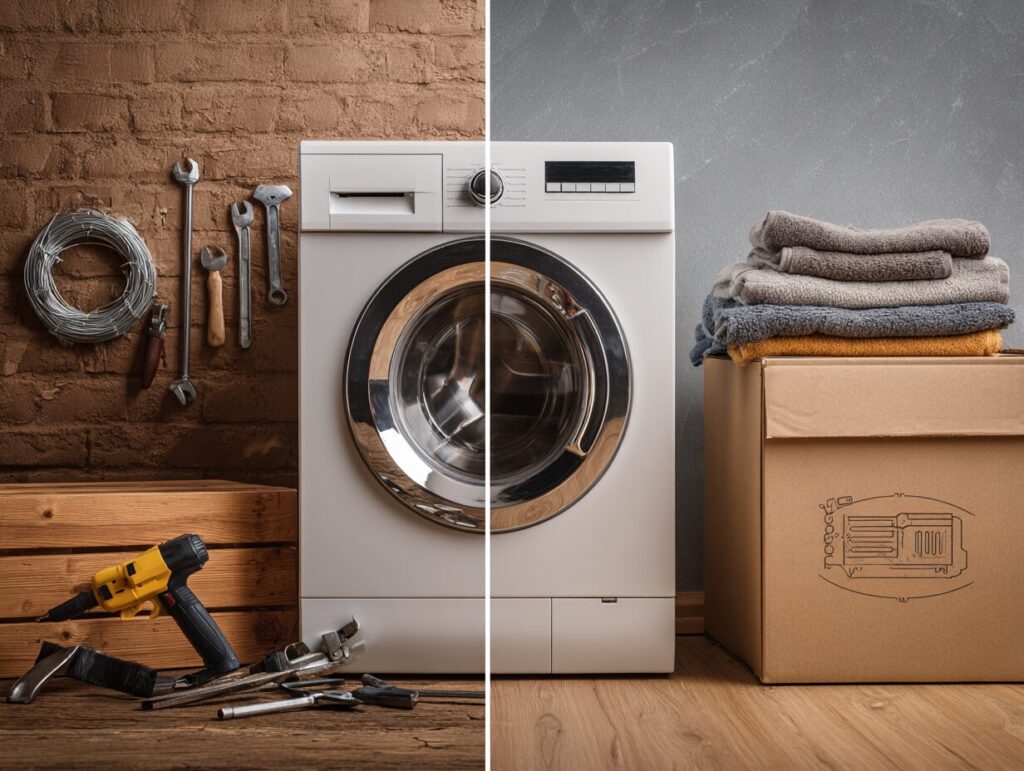
Repairing is often the better choice in several situations:
Your appliance is still under warranty. If your dishwasher or oven is covered, the repair cost might be minimal or free. Always check your warranty before deciding.
The appliance is less than 5 years old. A newer appliance likely has several more years of life ahead. A simple repair can extend the life significantly.
The repair is minor. If your dryer just needs a new belt or your washing machine needs a pump replacement, and the cost is well below the 50 percent threshold, repair your appliances.
You’re on a tight budget. Sometimes, even if replacement is the better investment long-term, a repair provides a temporary fix when money is tight.
When Replacement is the Better Option

Your appliance is nearing the end of its lifespan. An older appliance that’s already lived most of its expected life will likely need more repairs soon.
Multiple problems exist. When your appliance issues pile up, replacement often costs less than fixing everything.
Parts are discontinued. For very old appliances, finding parts becomes difficult and expensive. This is common with appliances over 15 years old.
You want new features and better efficiency. Modern appliances offer smart technology, better performance, and significant energy savings that older models can’t match.
Factors to Consider Beyond Cost

Environmental Impact
Repairing or replacing affects the environment differently. Manufacturing new appliances requires energy and resources. However, newer models use less electricity and water, reducing your environmental footprint over time. Residents of Grand Prairie who care about conservation near Mountain Creek Lake State Park might weigh these factors carefully.
Peace of Mind
A new appliance comes with a warranty and the confidence that it won’t break down soon. This peace of mind has value, especially for busy families near schools like South Grand Prairie High School or Grand Prairie Fine Arts Academy.
Your Home’s Future
If you’re planning to sell your home soon, new appliances can increase property value. Buyers in sought-after Grand Prairie neighborhoods often prefer homes with updated appliances.
Making Your Decision: A Step-by-Step Approach
Check your appliance’s age
Look for the serial number to determine when it was made.
Get a professional repair estimate
A qualified technician can diagnose the problem and provide an accurate cost.
Research replacement costs
Include delivery, installation, and disposal fees.
Apply the 50 percent rule
Compare repair costs to replacement costs, considering your appliance’s age.
Consider energy efficiency
Calculate potential utility bill savings with a newer model.
Think about your timeline
If you need immediate results, repair might be faster than ordering a new appliance.
Common Household Appliances: Specific Guidance

Refrigerators
These workhorses of your kitchen are worth repairing if they’re less than 7 years old. Common issues like faulty thermostats or door seals are usually affordable fixes. However, compressor problems on older units often signal it’s time for replacement.

Washing Machines
A qualified technician can diagnose tFront-loading machines tend to last longer than top-loaders. If your machine is making unusual noises or leaking, get it checked. Minor issues like broken belts are worth fixing, but transmission problems usually mean replacement time.he problem and provide an accurate cost.

Dishwashers
With a shorter lifespan than other major appliances, dishwashers often need replacement rather than repair after 7 years. However, simple problems like clogged spray arms or faulty door latches are worth fixing.

Clothes Dryers
These appliances often outlast washers. Most dryer problems involve inexpensive parts like heating elements or thermostats. Unless your dryer is very old or has motor issues, repair is usually the better choice.
Professional Help Makes a Difference
Whether you decide to repair or replace your appliance, professional guidance helps you avoid costly mistakes. Experienced technicians can accurately diagnose problems and honestly tell you when an appliance isn’t worth saving.
For Grand Prairie residents, having a trusted local service means faster response times and familiarity with common issues in our area’s water and electrical systems. Texas weather, from summer heat waves to occasional winter freezes, affects how appliances perform and wear out.
Planning for the Future
Smart homeowners plan for appliance replacement before emergencies happen. Set aside money each month for eventual replacements. Track your appliances’ ages and watch for signs of decline.
Regular maintenance helps appliances last longer, potentially delaying the repair-or-replace decision. Simple tasks like cleaning refrigerator coils, replacing filters, and keeping machines level can add years to their life.
The Bottom Line
The decision to repair or replace an appliance depends on multiple factors unique to your situation. Age, repair cost, energy efficiency, and your budget all play roles. The 50 percent rule provides a helpful starting point, but consider all aspects before deciding.
Remember that both options have merit. Repairing extends an appliance’s life and reduces waste. Replacement brings energy savings, new features, and reliability. The right choice depends on your specific circumstances.
Frequently Asked Questions
How do I know if my appliance repair cost is reasonable?
Compare the repair estimate to the price of a new appliance. If it’s less than 50% of replacement cost and your appliance is less than halfway through its expected lifespan, the repair cost is likely reasonable. Always get estimates from certified technicians who can properly diagnose the issue.
Should I repair a 10-year-old refrigerator?
It depends on the repair needed and cost. A 10-year-old refrigerator is approaching the end of its typical lifespan (9-14 years). Minor repairs under $200 might be worthwhile, but major repairs like compressor replacement usually aren’t cost-effective at this age.
How much can I save with energy-efficient appliances?
Upgrading to ENERGY STAR appliances can save $100-200 annually on electricity for refrigerators alone. Over a 14-year lifespan, that’s $1,400-2,800 in savings. Efficient washers and dishwashers also reduce water bills significantly.
What’s the average appliance repair cost?
Repair costs vary widely by appliance and problem. Simple fixes like replacing seals or belts might cost $100-200. Major repairs like motors or compressors can run $400-600. Always get a written estimate before approving repairs.
Can I do DIY appliance repairs?
While some minor repairs like replacing filters or cleaning coils are DIY-friendly, most appliance repairs require professional expertise. Incorrect repairs can void warranties, cause further damage, or create safety hazards. The U.S. Consumer Product Safety Commission recommends professional service for electrical and gas appliances.
How long do appliance warranties typically last?
Most new appliances come with a one-year manufacturer warranty covering parts and labor. Extended warranties can provide coverage for 3-5 years. Always keep warranty documentation and register your appliances when purchased.
When should I call for same-day appliance repair?
Call for immediate service when your refrigerator stops cooling (to prevent food spoilage), when you have water leaks that could damage your home, or when safety issues arise with gas appliances. Most other repairs can wait for next-day service.
Is it worth repairing appliances before selling my home?
Working appliances are expected by buyers. If an appliance is completely broken, replacement or repair is usually necessary. However, if appliances work but are just old, you might negotiate with buyers instead of replacing them yourself.
For professional appliance repair services in Grand Prairie, TX, and surrounding areas including Arlington, Irving, and Dallas, contact Steve Alden Appliances at 682-300-9387. We provide honest assessments to help you make the best decision for your home and budget.